Industrial coating can protect a metal component and improve its appearance, but some features must meet specific requirements after finishing. Threads may need to remain clear for assembly. Mating surfaces may need a defined coating boundary. Electrical contact points, bores, and precision areas may require special attention. Identifying these details before production gives the coating team a clearer basis for planning the job.
New Finish, Inc.’s industrial masking services help manufacturers control where coatings are applied. For threaded holes and other critical features, useful instructions go beyond simply saying “mask.” Drawings and purchase orders should identify what needs protection and what result is expected.
Specify the Threaded Features
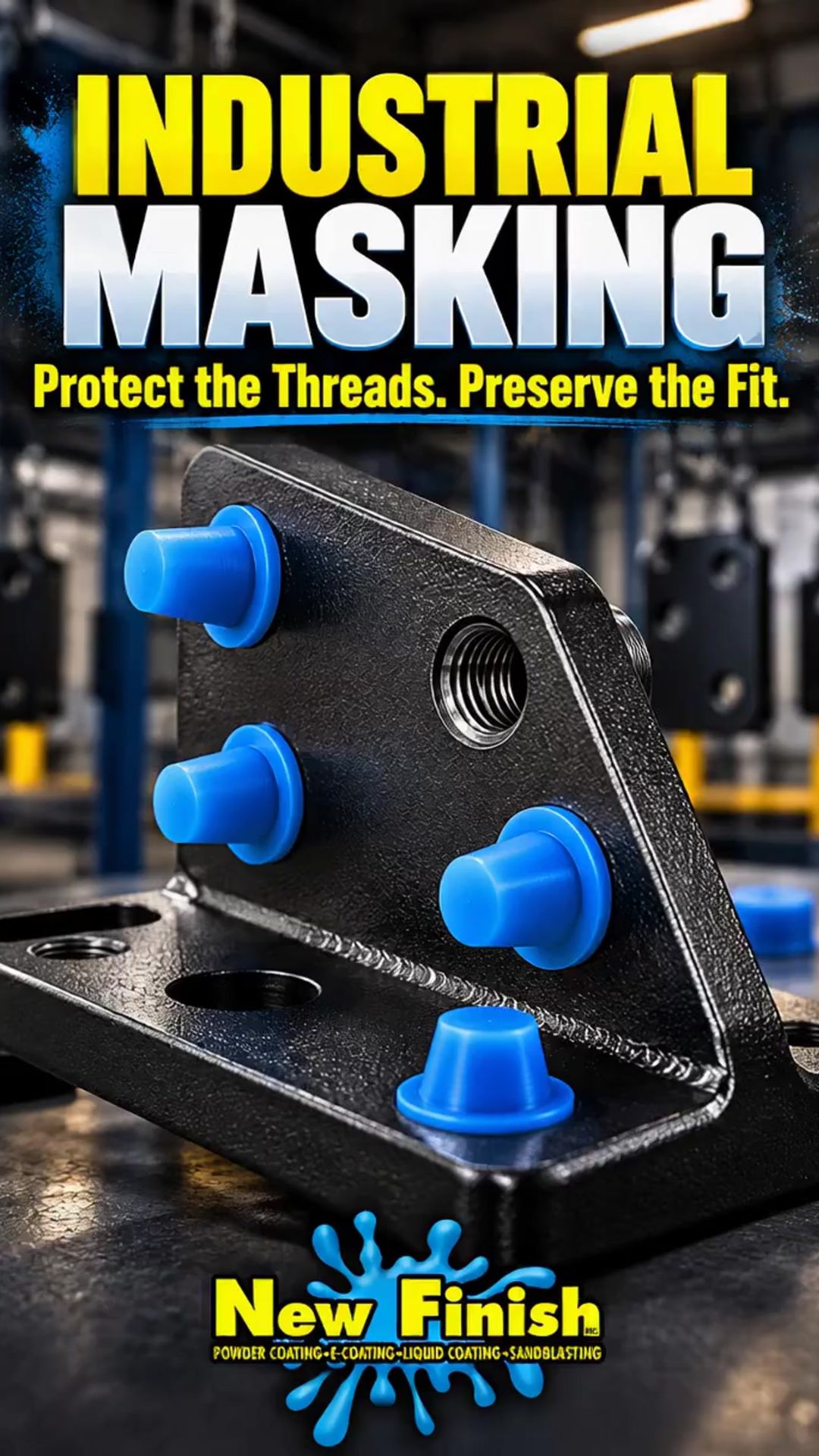
Coating on threads can affect how a fastener engages or make assembly more difficult. Before work begins, identify which holes, studs, or threaded areas require masking. Include the thread size and location on the drawing when available, and clarify whether the full feature or only a defined portion should remain free of coating.
Also tell the coating partner whether the opening is blind or passes through the part, and whether the edge around it may receive coating. These details can help the team review the part geometry and consider an appropriate masking approach. The right choice depends on the part, coating process, and project requirements. The Powder Coating Institute’s guide to powder coating masking fundamentals provides a useful overview of common masking considerations.
Call Out Mating and Contact Surfaces
Some parts connect to another component through a close fit or a designated contact area. Coating coverage on these surfaces may affect assembly, fit, or the intended function of the finished product. Point out mating faces, bearing areas, locating features, grounding points, and other surfaces with special requirements.
State whether each area must remain uncoated, receive a particular finish, or meet a defined boundary. Avoid relying on assumptions based on the part’s appearance. A clear callout helps engineering, purchasing, fabrication, and finishing teams work from the same expectation.
Put Masking Requirements on the Drawing
A marked drawing is often the clearest way to communicate masking requirements. Use notes, symbols, or a separate feature map to show the exact locations. Add details about acceptable coating edges, dimensions, and any areas that may receive limited coverage, when those requirements matter to the application.
Keep the drawing aligned with the purchase order and current part revision. If a new revision changes a hole, surface, or assembly relationship, update the masking instructions too. New Finish’s guide to industrial coating specifications for manufacturers explains other information that can help clarify a finishing project.
Review the Process Before Production
Masking materials and placement must suit the finishing process and the part’s requirements. Share the substrate, coating type, cure or drying requirements when known, expected quantities, and production timing. Discuss whether features should be protected during preparation as well as coating, since the sequence may affect the instructions.
For parts with several critical features, photos or a representative sample can help the coating partner understand the drawing. This is especially useful when the component includes hidden surfaces, recessed areas, or a mix of coated and uncoated zones. Manufacturers preparing aluminum or cast parts can also review New Finish’s guides to coating aluminum parts and powder coating cast metal parts.
Agree on Inspection Expectations
Before the production run, define how the masked features will be checked. Depending on the project, inspection may include visual review of the mask boundary, confirming that specified threads are usable, or checking dimensions against the drawing. Identify who will review the first finished parts and how any concerns should be handled before the full order proceeds.
Clear masking requirements support smoother coating and assembly planning. If your company is preparing metal components with threaded holes, mating surfaces, or other critical features, contact New Finish, Inc. to discuss the drawings, finish requirements, and production needs before the parts enter finishing.