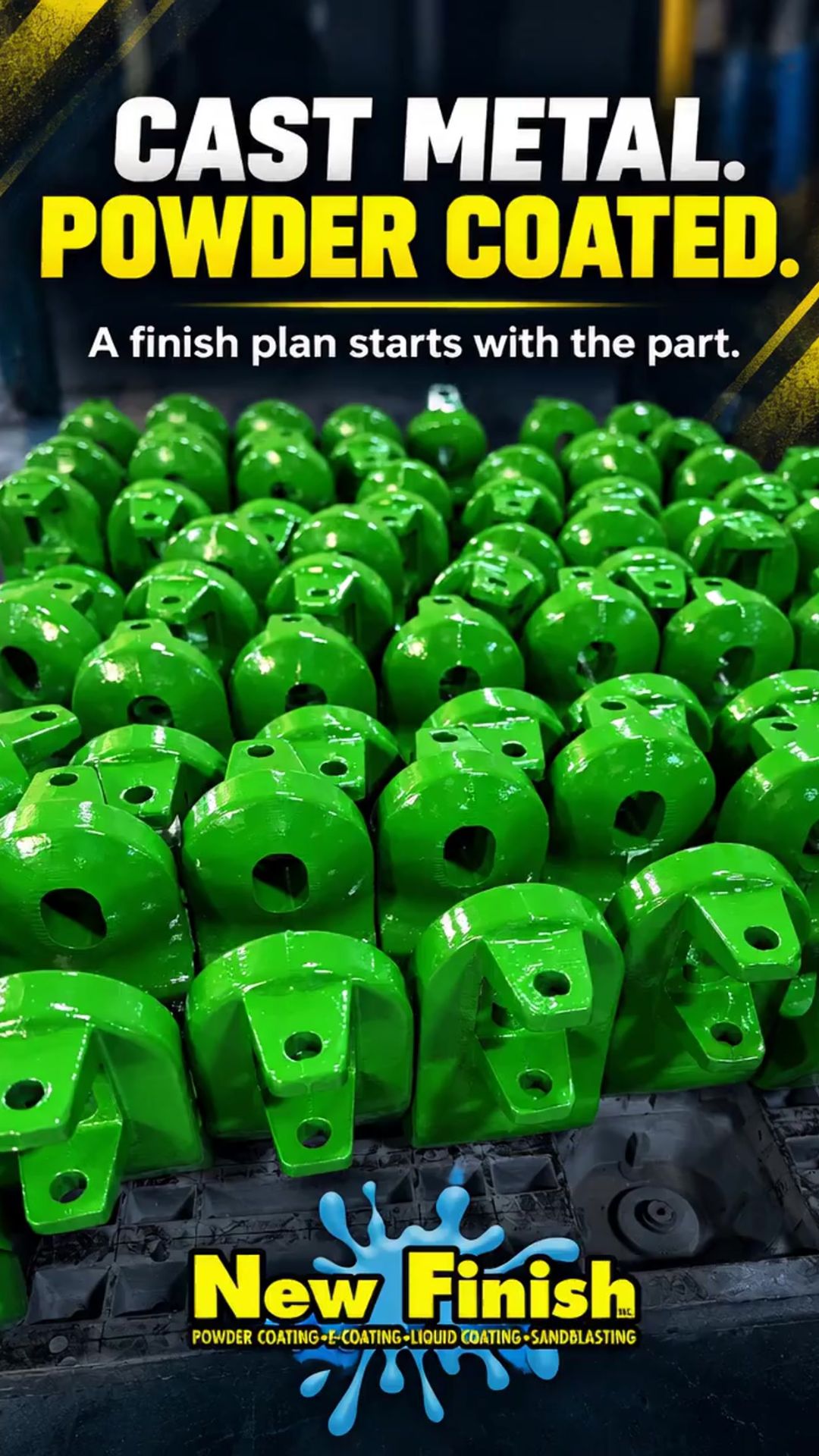
Cast metal components can be strong, detailed, and well suited to demanding products. Before powder coating cast metal parts, however, manufacturers should share information about the substrate and its condition with their coating partner. Some castings may contain porosity or hold moisture and other materials below the surface. When a part is heated during finishing, gas can escape and affect the coating’s appearance.
Planning for the casting—not just the selected color—can help manufacturers set expectations, identify questions early, and choose an appropriate path before production quantities are processed.
Why castings may need extra review
Cast components are made by pouring molten metal into a mold. Depending on the material, casting method, and part design, small pores or internal voids may remain. If trapped gas or moisture escapes while the coating is being heated, it may create visible pinholes, craters, or other surface irregularities. These issues are often described as outgassing.
Not every casting will have the same condition, and a defect cannot always be predicted from a drawing alone. Alloy, casting process, wall thickness, machining, cleaning, storage, and the finish requirements can all affect what should be reviewed. Manufacturers coating aluminum components can also consult our guide to coating aluminum parts before production.
Share part and process details early
Before requesting a coating plan, provide the information available about the casting. Include the material or alloy, the part drawing, expected production volume, and the areas where appearance or coating performance is most important. Note any machining, welding, prior coating, oil, release agents, or other treatments the part has received.
Photos of representative parts can help explain surface conditions that may not be obvious from a drawing. If the part has recessed areas, thin sections, heavy sections, or other challenging features, call those out as well. Our article on planning coatings for complex metal parts explains why shape and access are important to discuss.
Agree on appearance expectations
A coating can provide color and a protective finish, but it may not conceal every irregularity in a cast surface. Before production, manufacturers and coating teams should identify which surfaces are visible, how much variation is acceptable, and what requirements apply to the finished component. Clear criteria help everyone evaluate the same details.
Written finish criteria can include color, gloss, texture, coverage, masking locations, and inspection expectations that matter to assembly or end use. When appropriate for the project, a sample or first article can give the team an opportunity to review appearance, coverage, and other agreed requirements before a larger run. See our post about industrial coating approval samples for more on confirming a finish before full production.
Review the coating approach for the actual part
Powder coating involves heat, so the material, part configuration, specifications, and intended use should all be considered when a finishing plan is developed. The right preparation and process depend on the individual component and project requirements. Avoid assuming that one treatment will be appropriate for every casting.
New Finish, Inc. works with manufacturers on commercial coating projects, including powder coating and other finishing services. Sharing drawings, material details, and finish expectations early can help the team review the project and discuss next steps. Learn more about our industrial powder coating services.
If your company is preparing cast metal components for finishing, contact New Finish to discuss the parts, specifications, and production needs. A project-specific review can help identify questions before coating begins. Contact New Finish, Inc. to start the conversation.