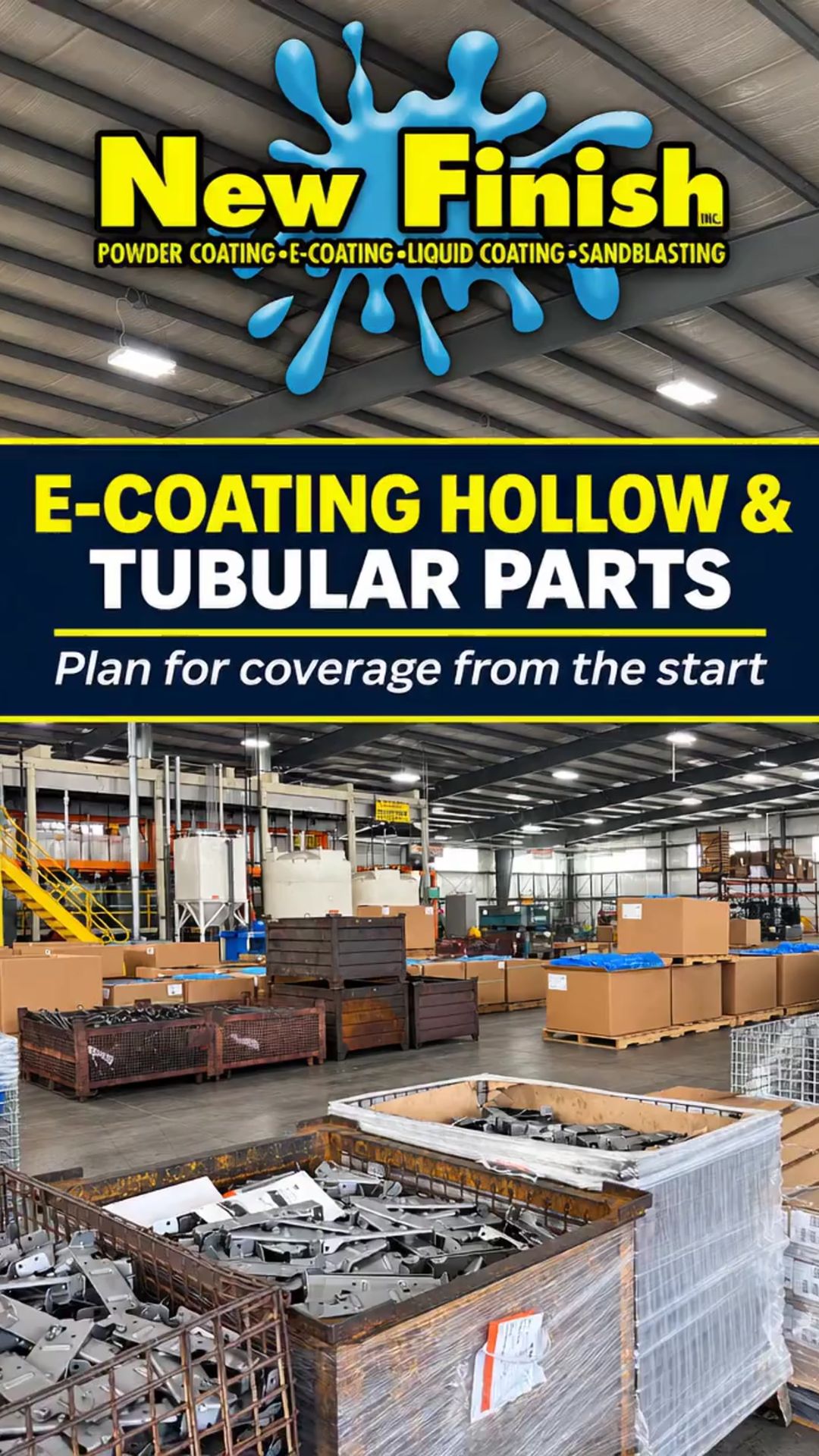
Hollow and tubular metal parts can present coating challenges that are easy to overlook during the design and quoting stages. Openings, enclosed spaces, part orientation, and electrical contact can all affect how a component moves through an e-coating process. Reviewing these details with a coating partner before production can help manufacturers set clear expectations for coverage and handling.
Consider the part’s geometry
E-coating is an immersion process in which an electric current helps deposit coating onto a conductive metal part. The EPA’s technical overview of electrocoating describes it as a specialized form of dip coating. Because the part is immersed, its geometry and the way it enters and exits the bath matter.
Tubes, channels, cavities, and enclosed sections may hold air or liquid during processing. Depending on the part design and how it is positioned, these areas may affect coating access, drainage, or the consistency of the finished result. There is no single design rule that fits every component, so manufacturers should discuss the actual part and its requirements with their coating provider.
Plan venting and drainage early
When a part has hollow areas or pockets, ask whether its openings allow air to escape and liquid to drain during processing. The appropriate opening locations and sizes depend on the part’s shape, material, orientation, and required finish. Reviewing drawings or representative samples ahead of time can help identify questions before parts enter production.
Drainage deserves attention too. Liquid that remains trapped in a recess or tube may affect handling as the part moves through the process. The coating team can review how the part may need to be oriented or racked to support its movement through the line. Manufacturers should also identify any surfaces or openings that need to remain uncoated and discuss masking requirements before the run.
Confirm racking and electrical contact
E-coating depends on electrical contact with the part. The selected rack points and part arrangement need to support the process while accounting for the component’s size, shape, and finish requirements. Because contact points and hanging methods can leave marks or affect coverage in specific areas, it is helpful to identify critical surfaces and appearance expectations in advance.
Sharing detailed drawings, material information, target quantities, and any applicable coating specifications gives the coating partner a clearer picture of the job. If the part is new or has complex internal geometry, a sample review or production discussion may help clarify process considerations before a larger run.
Discuss e-coating requirements before production
New Finish, Inc. provides e-coating services for manufacturers and can discuss part geometry, process requirements, and scheduling needs. Our broader industrial coating services include multiple finishing options, depending on the project and its specifications.
If you are planning to e-coat hollow or tubular metal parts, contact New Finish early in the process. Send our team your project details to start a conversation about the parts, desired coverage, and production requirements.