Before a large quantity of metal parts moves through the finishing process, manufacturers need confidence that the completed coating will meet their requirements. Industrial coating approval samples can help manufacturers evaluate important details before full production begins, reducing uncertainty and creating a clearer standard for the coating supplier and customer.
An approval sample, initial coated part or limited first production run may provide an opportunity to review the appearance and functional requirements of a finish. This can be especially valuable for visible OEM components, parts with detailed masking requirements and products that must remain consistent across recurring orders.
What Can Be Evaluated on an Industrial Coating Approval Sample?
An industrial coating is responsible for more than adding color to a metal component. Depending on the application, the finish may need to provide corrosion resistance, durability, uniform coverage and a specific appearance.
Before approving a coating for production, manufacturers may need to evaluate:
- Color and overall appearance
- Gloss level and surface texture
- Coverage around edges, corners and recessed areas
- Masking boundaries and coating-free surfaces
- Compatibility with assembly requirements
- The condition of the part after handling and curing
These details should be supported by clear industrial coating specifications. Drawings, purchase orders, coating requirements and approved references help everyone understand what the finished component is expected to look like and how it must perform.
Approval Samples Can Help Prevent Production Problems
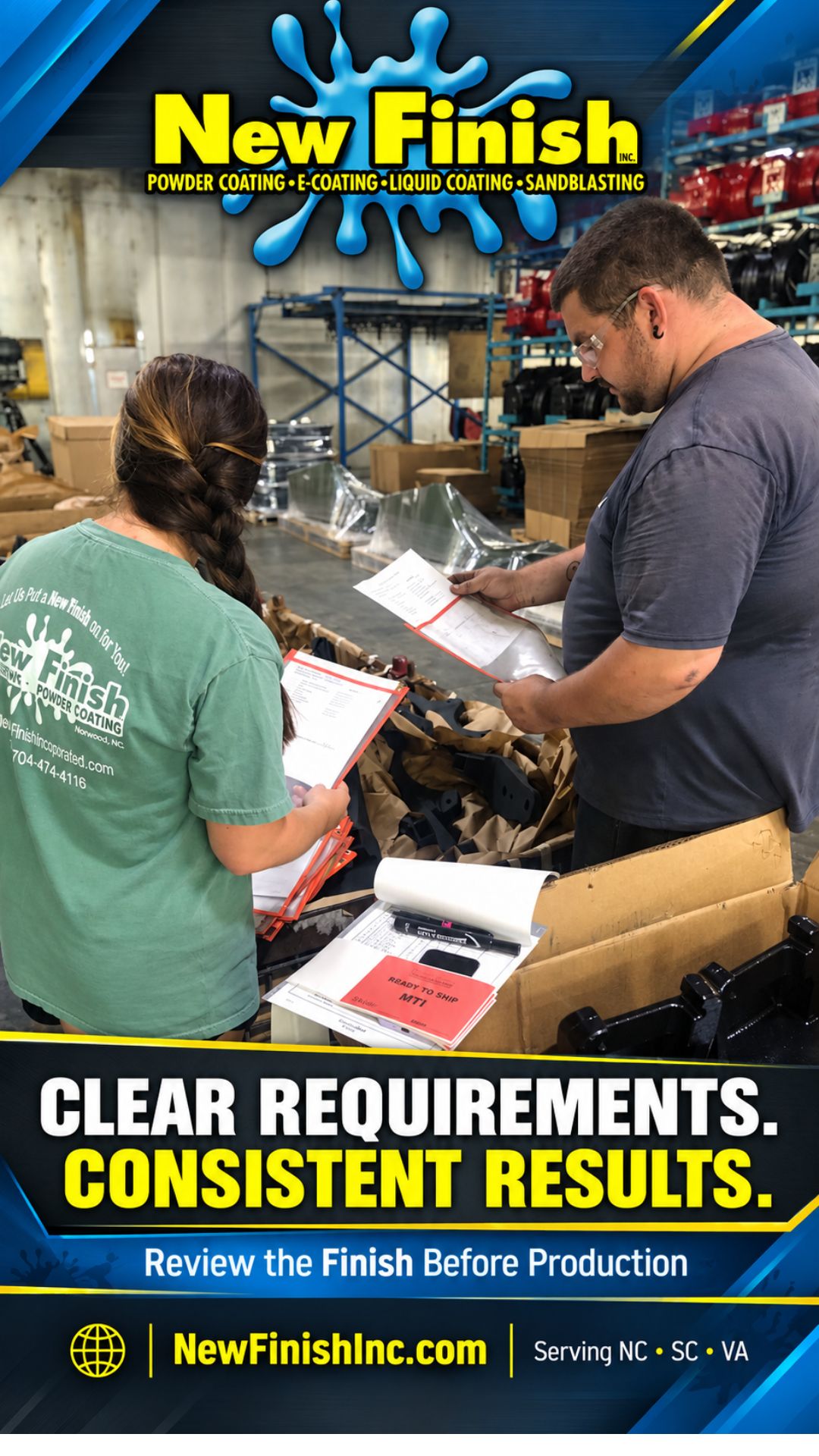
A difference that seems minor on one sample can become a significant concern when it appears across hundreds or thousands of components. Reviewing the first coated parts can help identify questions involving color, gloss, texture, coverage, masking or part handling before a larger production quantity is completed.
Approval samples may also give manufacturers an opportunity to verify that coated parts fit correctly during assembly. Threaded holes, machined areas, electrical contact points, bearing surfaces and other critical features may need to remain free of coating. Evaluating these requirements early can help reduce avoidable rework and production interruptions.
Connect Approval Requirements to Production Documentation
Once a finish has been reviewed and accepted, the approved requirements should be communicated clearly for future orders. Part numbers, drawing revisions, coating types, color references, gloss requirements, masking instructions and other project information can help support consistency.
This connects directly with industrial coating documentation and traceability. Maintaining accurate coating information gives manufacturers and finishing providers a reliable reference as parts move from an initial order into ongoing production.
Plan for Consistency From the First Part Forward
An approval sample is most valuable when it becomes part of a larger production plan. Manufacturers should consider future quantities, delivery schedules, packaging requirements, revisions and repeat-order expectations when establishing the coating process.
Our recent guide to consistent industrial coating results explains how clear requirements and controlled processes can support quality as a project moves from its first parts into recurring production.
New Finish, Inc. provides industrial metal coating services for manufacturers throughout North Carolina, South Carolina and Virginia. Capabilities include powder coating, e-coating, liquid coating, CARC coating, sandblasting, surface preparation and professional masking for manufactured metal parts and industrial components.
Discuss Your Production Coating Requirements
If you are preparing a new component for production or reviewing the coating requirements for an existing part, early communication can help establish clear expectations. Contact New Finish, Inc. to discuss your parts, drawings, quantities, coating specifications and production schedule.