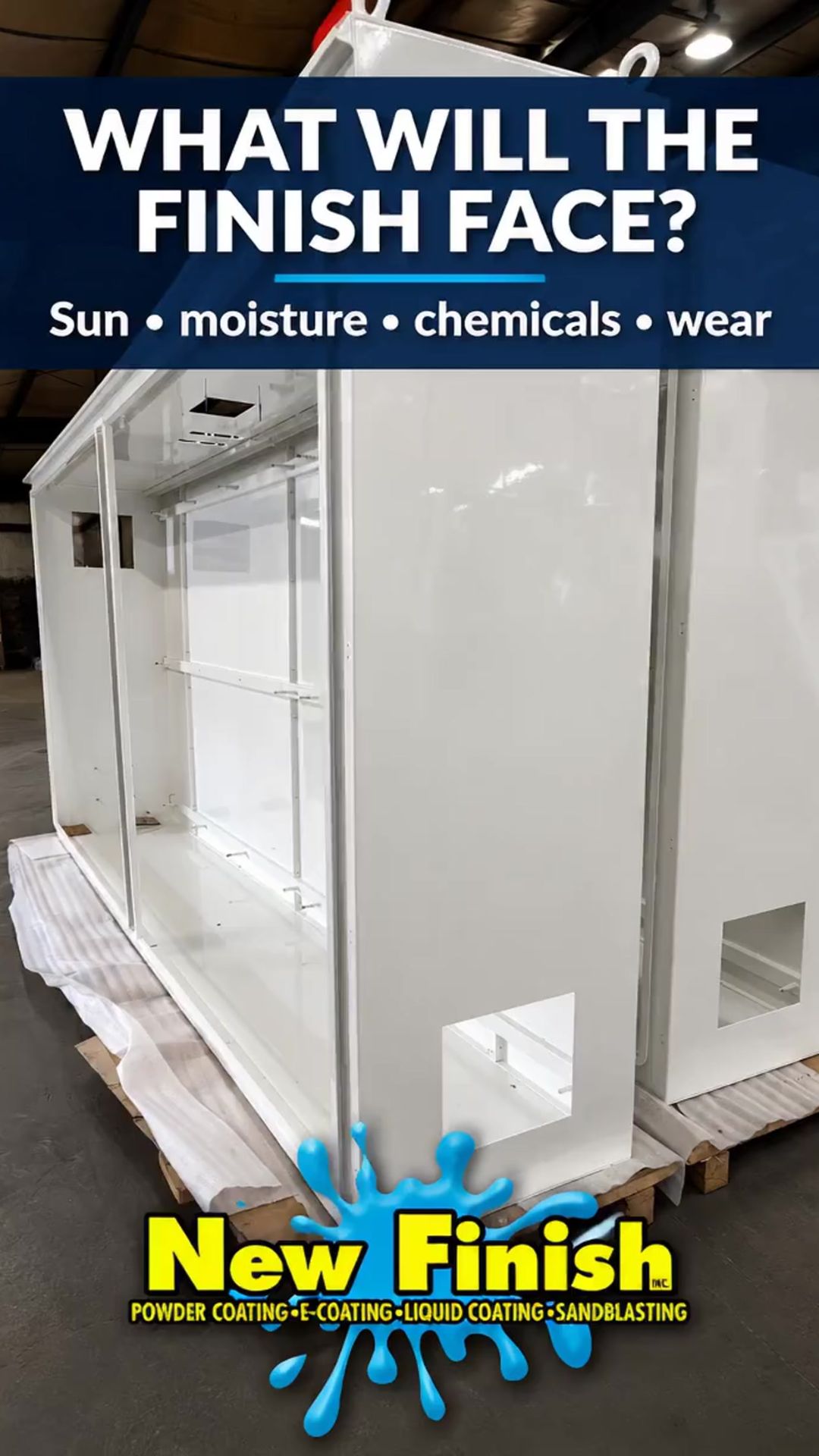
A coated part has to perform in the conditions it will actually face—not just look right when it leaves the production floor. Moisture, sunlight, chemicals, temperature changes, and everyday handling can all affect how a finish performs over time. That is why industrial coating selection should begin with a clear picture of how and where the finished part will be used.
Sharing those details early helps manufacturers and their coating partner discuss the right process, preparation, and finish for the project. No single coating is the right fit for every part or operating environment.
Start with the part’s working conditions
Before selecting a coating process, consider the part’s location and exposure. Will it be used indoors or outdoors? Will it be exposed to rain, condensation, road salt, cleaning products, oils, or other chemicals? Will it sit in direct sunlight, near a heat source, or in an area with frequent temperature changes?
Also consider physical wear. Parts that are handled often, assembled against other components, or exposed to rubbing and impact may have different finish requirements from parts that remain stationary and protected. Describe the real operating conditions as specifically as possible. “Industrial use” alone may not give the project team enough information to evaluate performance needs.
Identify appearance and performance requirements
Protection is only one part of a coating specification. Manufacturers may also need a particular color, gloss level, texture, or appearance across repeat production runs. They may need the finished part to meet dimensional requirements, preserve fit at mating surfaces, or leave specified areas uncoated for grounding, bonding, or assembly.
Include drawings, written specifications, approved samples, and any inspection criteria with the project information. If the part has critical edges, recesses, holes, or close-fitting components, point those out during planning. This gives the finishing team a clearer understanding of both the appearance expectations and functional requirements.
Share details that help guide the conversation
A useful coating discussion includes more than the part name. Share:
- Substrate material and part dimensions
- Where the part will be used and what it may contact
- Expected exposure to moisture, sunlight, chemicals, heat, or physical wear
- Color, gloss, texture, and coverage requirements
- Areas that need masking or must remain free of coating
- Production quantities, timing, packaging, and handling needs
When requirements come from an engineering drawing, customer specification, or applicable standard, provide the current documents. The coating system and application plan should be reviewed against the project requirements and the coating manufacturer’s technical guidance.
Coordinate coating with production
Coating decisions can affect part design, masking, assembly sequence, packaging, and delivery. Discussing them before production is underway gives the manufacturer and finishing partner time to identify questions and coordinate expectations. It can also help clarify which details need approval before a full production run begins.
New Finish, Inc. provides powder coating, e-coating, liquid coating, sandblasting, masking, and other finishing services for manufacturers across North Carolina, South Carolina, and Virginia. To discuss a project’s materials, operating conditions, and finish requirements, contact New Finish, Inc..