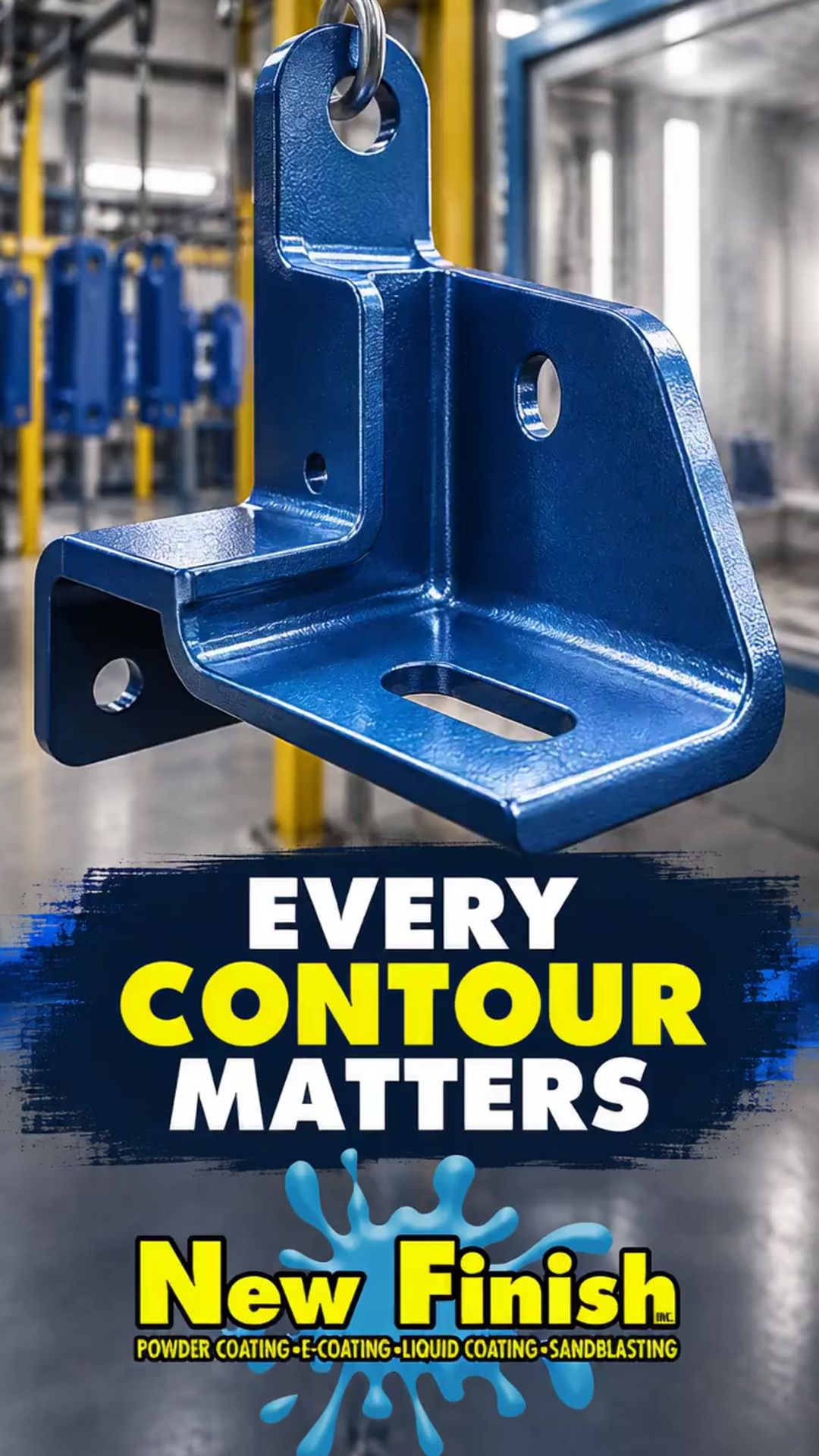
Metal parts don’t always have simple, flat surfaces. Brackets, housings, frames, and fabricated assemblies may include deep recesses, narrow channels, inside corners, and overlapping features. These details can affect how a coating reaches the part and where it builds up. Planning for the shape of a component helps manufacturers communicate requirements and choose a finishing approach that fits the job.
When a part has complex geometry, the goal is more than making its visible surfaces look finished. The coating may also need to protect less visible areas, meet a specified film thickness, and leave critical surfaces ready for assembly or use. Those requirements are best discussed before production begins.
Why Part Shape Matters
Coating processes behave differently around edges, corners, cavities, and narrow openings. A recessed area may be difficult to reach with some application methods, while an edge or outside corner may receive a different film build than a broad, open surface. The result depends on the part’s shape, the coating system, and the way the part is presented during processing.
That is why it helps to look at a part as a three-dimensional component rather than a flat drawing. Identify the surfaces that need protection, the areas that will remain visible, and any locations where coverage or thickness is especially important. If the component includes internal passages or deep pockets, call those out clearly so they can be reviewed before the finishing plan is set.
Match the Process to the Part
There is no single coating process that fits every geometry and performance requirement. New Finish provides industrial powder coating and e-coating, among other finishing services. Each process has its own application characteristics, and the best option depends on the part, the specified finish, and how the finished component will be used.
For example, the shape of a component can influence how coating reaches a recess or interior surface. New Finish’s e-coating information describes the process as providing consistent film builds over complex parts. Its powder coating page also discusses coverage on intricate shapes and hard-to-reach areas. These details make it useful to share drawings and discuss the geometry with the coating team when comparing process options.
What to Share Before Production
When requesting a review or quote, provide current part drawings and identify the areas that matter most. Include the required coating type, color or finish, target thickness if specified, performance requirements, and any surfaces that must remain free of coating. Marking these details directly on a drawing can help reduce assumptions.
It is also helpful to explain how the part will be assembled or installed. Let the coating partner know if components fit together, slide against one another, use threaded connections, or have close-clearance areas. These details don’t replace formal specifications; they give the finishing team context for reviewing the job and raising questions before parts enter production.
Review the Finished Part Against the Requirement
For a new or revised component, consider agreeing on how the finished part will be reviewed. Depending on the project, that may include checking representative surfaces, verifying specified film thickness, or confirming that protected areas remain clear. A sample or first article can help the team identify questions before a larger production run.
Clear communication about geometry supports a more informed conversation about process, coverage, and inspection. If your parts have recessed or hard-to-reach features, contact New Finish, Inc. to discuss the drawings and coating requirements before production. Serving manufacturers across North Carolina, South Carolina, and Virginia, New Finish can help review the project and determine the next steps.