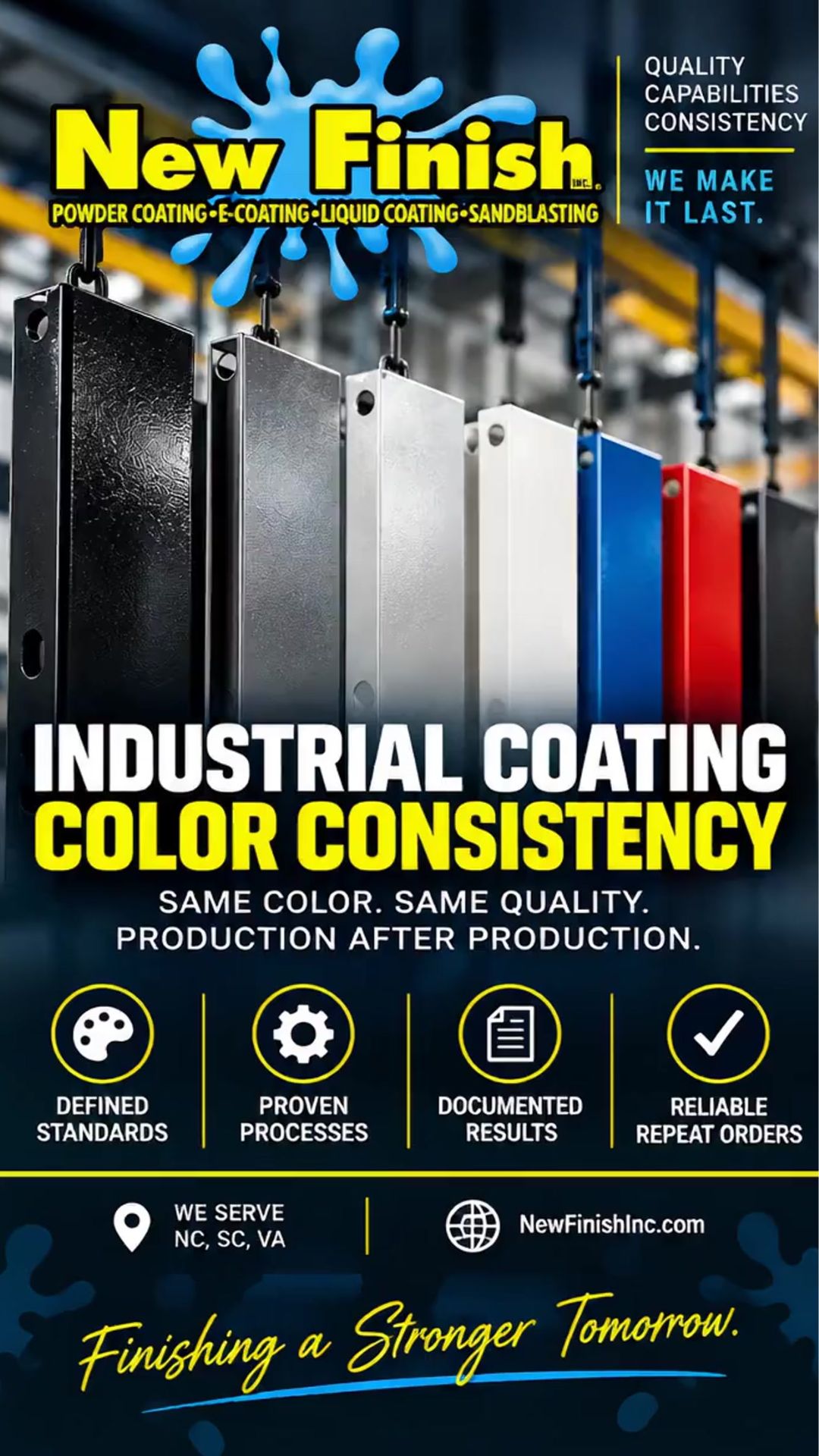
When coated metal components remain visible after assembly, color is an important part of the finished product. Manufacturers need more than one attractive part—they need a finish that remains consistent as additional batches move through production. Achieving reliable industrial coating color consistency begins with clearly defined expectations and continues through surface preparation, coating selection, application, curing, inspection and documentation.
Color consistency is especially important for OEM components, equipment panels, enclosures, frames, brackets and other parts that may be installed beside components from an earlier production run. Even a small variation may become more noticeable when coated parts are viewed together.
Start With a Clearly Defined Color Standard
Descriptions such as black, white, gray or blue are usually not specific enough for an industrial coating project. Manufacturers should provide an established color reference, coating specification or approved sample whenever appearance matters.
The complete requirement may include more than color. Gloss level, texture, surface smoothness and acceptable appearance standards can all affect how a finished part looks. A high-gloss black coating, for example, may appear different from a matte or textured black even when the general color family is the same.
New Finish previously discussed how Class A finish standards can involve color consistency, gloss, texture, coverage and the absence of noticeable surface defects. Because these expectations can vary by customer and application, they should be communicated before production begins.
The Metal Surface Can Affect the Final Appearance
The condition of the substrate can influence how a coating looks after application. Rust, mill scale, weld spatter, scratches, oils, residue and differences in surface texture may affect the uniformity of the finished part.
Consistent preparation helps create a more predictable foundation for coating. Depending on the component and specification, parts may require cleaning, pretreatment, sandblasting or another form of surface preparation before the selected finish is applied.
Manufacturers should also notify their coating partner when materials, fabrication methods or suppliers change. Parts that look similar may respond differently during preparation, application or curing if the underlying material or surface condition has changed.
Select the Right Industrial Coating Process
Different coating systems can produce different colors, gloss levels, textures and performance characteristics. The right choice depends on the component, its intended use, appearance requirements and operating environment.
Industrial powder coating offers a broad selection of colors, textures and gloss levels while providing a durable finish for many fabricated metal parts. Industrial liquid coating may be appropriate when a project requires a particular appearance, specialized coating system or application method.
The coating process should not be changed based on color alone. Performance requirements involving corrosion resistance, chemical exposure, abrasion, outdoor use and temperature must also be considered.
Document the Approved Finish for Repeat Orders
Once a color and finish have been approved, the information should be connected to the correct part number, drawing revision, purchase order or production record. Helpful details may include the coating manufacturer, product designation, color reference, gloss range, texture, masking instructions and any approved physical sample.
This is where industrial coating documentation and traceability become especially valuable. Accurate records help manufacturers and coating providers identify the requirements associated with a specific component and carry those requirements into future production orders.
Manufacturers should communicate revisions clearly. A change to the part material, design, coating product, color requirement or approved sample should be documented rather than passed along informally.
Evaluate Color Under Consistent Conditions
Lighting and viewing conditions can influence how people perceive color and gloss. A finish may look different under bright factory lighting, natural daylight or the lighting used where the final product will be displayed.
When visual appearance is important, manufacturers should establish how the finished part will be evaluated. Comparing production parts with the approved reference under consistent conditions helps reduce subjective decisions and gives everyone a clearer standard.
Support Consistent Finishes Across Production Runs
New Finish, Inc. provides industrial powder coating, e-coating, liquid coating, CARC coating, masking, sandblasting and surface preparation for manufacturers throughout North Carolina, South Carolina and Virginia.
If your manufactured components require a defined color, gloss, texture or Class A appearance, contact New Finish, Inc. to discuss your parts, specifications, quantities and repeat-production requirements.