For manufacturers, the quality of an industrial coating is about more than appearance. A finished part may look clean on the surface, but the real value comes from how well the coating performs over time. That is why industrial coating quality control is so important for metal parts used in heavy equipment, trucking, transportation, recreational products, military-related applications, machinery, and industrial assemblies.
At New Finish, Inc., manufacturers across North Carolina, South Carolina, and Virginia rely on consistent coating processes to help protect metal parts from corrosion, abrasion, moisture, chemicals, road exposure, weather, and demanding operating conditions. Quality control helps ensure that each part receives the right preparation, coating application, thickness, coverage, curing, and inspection before it moves forward.
Quality Starts Before the Coating Is Applied
A durable coating begins long before powder, liquid, e-coat, or CARC coating is applied. The condition of the metal surface plays a major role in how well the finish adheres and performs. Dirt, oil, rust, scale, residue, sharp edges, and inconsistent surfaces can all interfere with coating performance.
That is why proper sandblasting and surface preparation are such important steps in the finishing process. Surface preparation helps create a cleaner, more consistent foundation for the coating system. When this step is handled correctly, manufacturers can reduce the risk of premature coating failure, peeling, corrosion, and costly rework.
Process Control Helps Improve Consistency
Industrial parts are not always simple. Some have tight tolerances, recessed areas, welded seams, edges, threaded areas, connection points, or surfaces that must remain uncoated. Without a controlled process, coating results can vary from part to part.
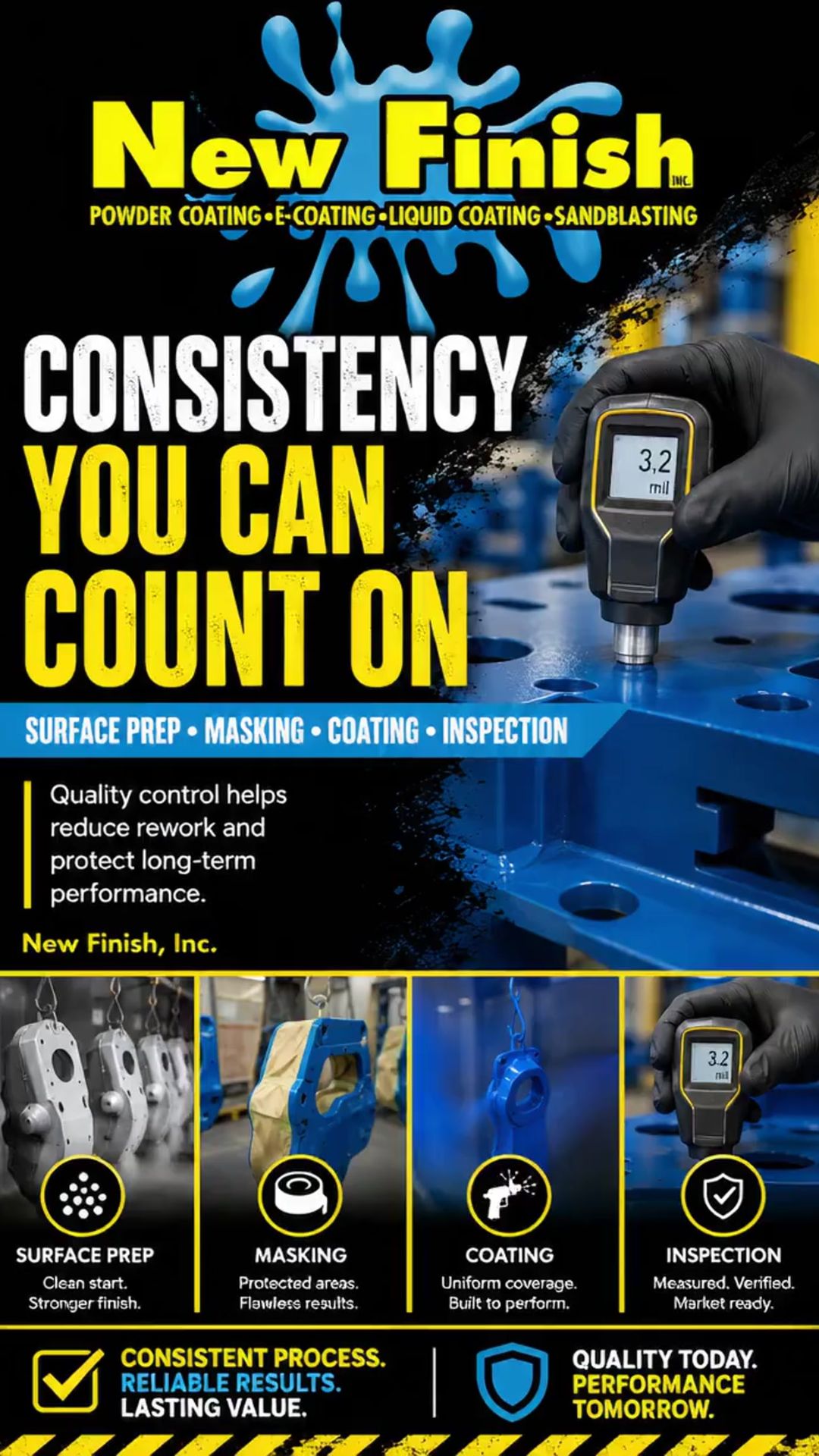
New Finish, Inc. provides industrial metal coatings with attention to the full process, not just the final finish. Consistency depends on proper handling, preparation, masking, coating selection, application technique, cure time, and inspection. For manufacturers producing repeat parts or high-volume components, this level of control helps support dependable results.
Masking Protects Critical Areas
Many metal parts require certain areas to remain free of coating. Threads, holes, mating surfaces, bearing areas, electrical contact points, and precision-fit sections may need protection during the coating process. If those areas are coated incorrectly, the part may not assemble, fit, or function as intended.
Professional industrial masking helps protect these critical areas while allowing the rest of the part to receive the needed finish. This is especially important for manufacturers that need both durability and accuracy. Good masking supports better quality control, fewer rejected parts, and smoother production flow.
Choosing the Right Coating Method Matters
Different parts need different coating solutions. Powder coating services may be ideal for parts that need a durable, attractive, and efficient finish. E-coating services can help provide excellent coverage on complex shapes and recessed areas. Liquid coating services may be the right choice for large parts, special specifications, color requirements, or applications that need a wet finish.
For military and defense-related applications, CARC coating may be required when parts need specialized performance in demanding environments. No matter which coating process is selected, quality control helps ensure the finish is applied according to the needs of the part, the project, and the manufacturer.
Coating Thickness and Cure Quality Affect Performance
Coating thickness is another key part of industrial coating quality control. Too little coating may leave the part underprotected. Too much coating may affect fit, function, flexibility, appearance, or tolerance requirements. Monitoring coating thickness helps support corrosion resistance, durability, and proper part performance.
Curing also matters. If a coating is not properly cured, it may not achieve the strength, adhesion, chemical resistance, or durability expected from the system. A controlled curing process helps the coating perform as intended once the part is placed into service.
Reducing Rework and Protecting Long-Term Value
Poor coating quality can create serious problems for manufacturers. Failed finishes can lead to corrosion, customer complaints, warranty issues, rejected parts, production delays, and added costs. Strong quality control helps reduce these risks by identifying concerns before parts leave the coating facility.
For manufacturers across NC, SC, and Virginia, working with an experienced coating partner can make a meaningful difference in long-term value. New Finish, Inc. understands that industrial coating quality control is about protecting the part, the production schedule, the customer relationship, and the reputation of the finished product.
Partner with New Finish, Inc.
If your metal parts require durable, consistent, and professionally controlled industrial coatings, New Finish, Inc. can help. With powder coating, e-coating, liquid coating, CARC coating, masking, sandblasting, and surface preparation services, our team supports manufacturers with dependable finishing solutions built around performance.
To discuss your next coating project, contact New Finish, Inc. today.