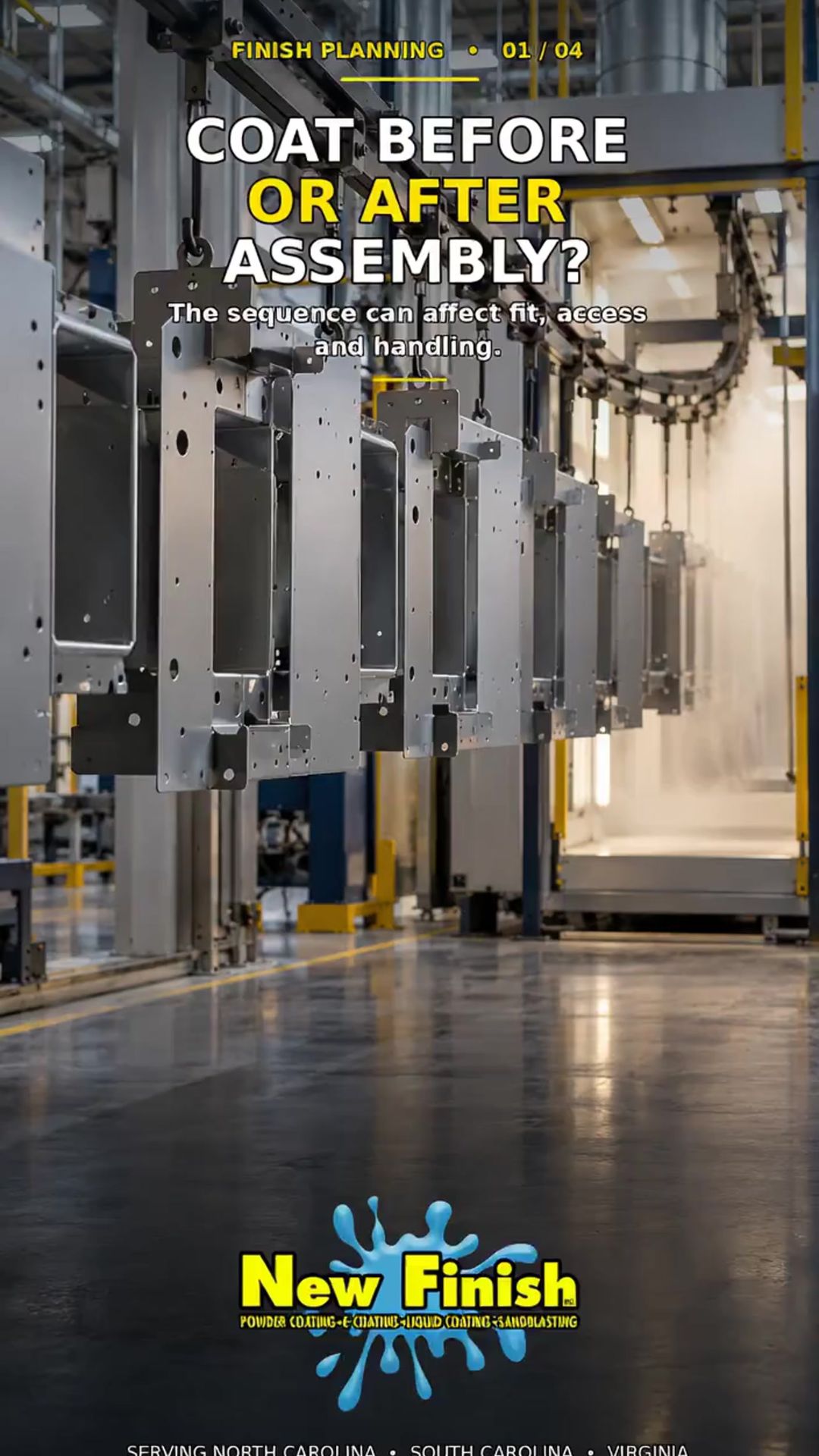
When a product includes multiple metal components, manufacturers need to decide when each part should be coated: before assembly or after. The right sequence depends on the part’s function, the surfaces that need protection, material compatibility, and how the finished components will fit together. Addressing these questions early can help prevent coating from interfering with assembly or leaving important surfaces unprotected.
Consider Which Surfaces Need a Finish
Some surfaces need a protective or decorative finish, while others must remain accessible for joining or operation. Once components are assembled, joints, recesses, and mating areas may be difficult to reach. Coating separate components can provide access to more surfaces, but it also means finished parts must be handled carefully as they move to assembly.
Review the assembled product and individual part drawings together. Identify visible surfaces, areas exposed to the environment, and locations where the coating must stop. A metal coatings partner can help discuss which finishing options may suit the part and its intended use.
Protect Fits, Threads, and Contact Points
Coatings add material to a surface. On close-fitting parts, that added thickness may affect clearances or make assembly more difficult. Threads, grounding points, electrical contacts, bearing surfaces, and other functional interfaces may require special attention.
Mark these locations clearly on drawings and purchase documents. If some surfaces should remain uncoated, discuss how to protect them before production. Industrial masking can help keep designated areas free of coating, subject to review of the part geometry, finish requirements, and production process.
Review Materials and Process Conditions
An assembly may contain different metals, fasteners, seals, plastics, or other components. Before coating an assembled unit, confirm that every material can tolerate the selected process conditions. The coating method may involve curing, immersion, or other steps that are suitable for some components but not others.
For example, powder coating and e-coating use different application processes. The best option depends on the part, the performance requirements, and the areas that need coverage. Share material information and assembly details with the coater before selecting a process.
Plan for Handling and Assembly
When parts are coated separately, handling becomes part of the finishing plan. Consider how components will be identified, packaged, transported, stored, and assembled without damaging the finish. If assembly follows coating, clarify which surfaces may be contacted by tools or fixtures and how parts should be supported during the work.
When coating after assembly, consider whether joints and enclosed areas can drain, dry, or be reached by the coating process. Some designs may be better suited to finishing individual components; others may be appropriate for coating after assembly. The decision should reflect the part’s geometry, required protection, and production sequence.
Make the Sequence Clear Before Production
Document the coating sequence, required finish, areas to mask, and any critical fit or contact surfaces in the appropriate drawings and purchase documents. If a design or assembly changes, review whether the coating plan needs to change as well.
New Finish, Inc. provides industrial coating services for manufacturers across North Carolina, South Carolina, and Virginia. Share your part drawings, materials, finish requirements, and assembly sequence with the team to discuss your project. Contact New Finish, Inc. to get started.