E-coating (electrocoating) is a highly effective process used to protect metal components from corrosion, rust, and environmental damage across a wide range of industries.
As manufacturers and industrial operations continue to demand longer-lasting, more durable finishes, e-coating has become a critical solution for ensuring consistent coverage and long-term performance.
Understanding how the e-coating process works—and where it is used—helps highlight why it remains one of the most widely adopted coating systems today.
What is E-Coating?
E-coating, also known as electrophoretic coating, is a process where metal parts are submerged in a paint bath and coated using an electrical charge.
Positively charged paint particles are attracted to the negatively charged metal surface, creating a uniform and complete coating—even in hard-to-reach areas.
This method is commonly used on materials such as steel and aluminum to provide strong corrosion resistance and long-term durability.
The E-Coating Process
The electrocoating process includes several key steps:
- Pretreatment: Cleaning and preparing the surface to remove contaminants, rust, and oxidation.
- Electro-deposition: Submerging the part in a coating bath where charged particles bond to the surface.
- Curing: Applying heat to solidify and adhere the coating.
- Quality Control: Inspecting for uniformity, thickness, and performance.
Industries That Benefit from E-Coating
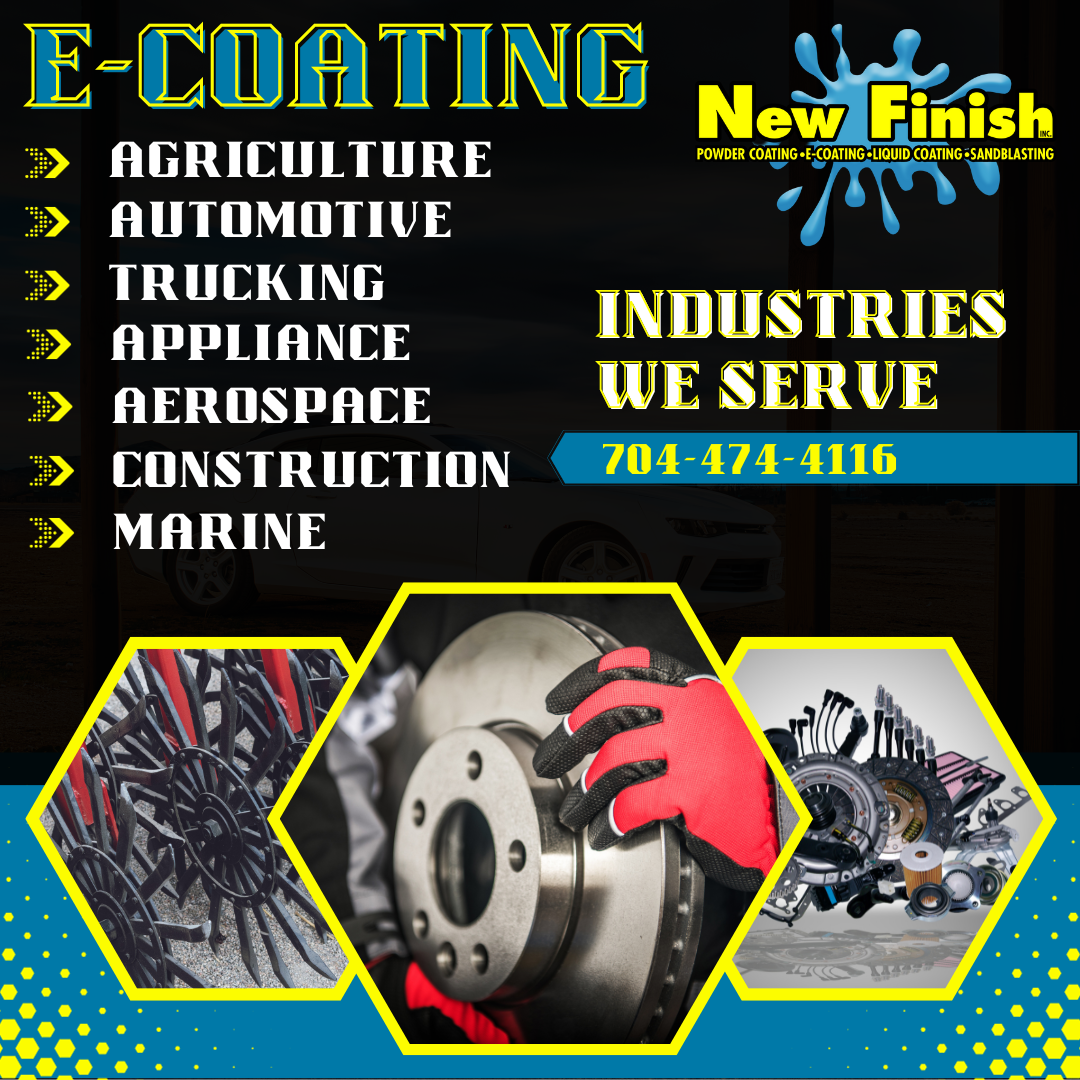
E-coating is widely used across industries where corrosion protection and durability are essential:
- Automotive: Chassis, fasteners, and structural components
- Aerospace: Aircraft parts requiring long-term protection
- Appliance Manufacturing: Products exposed to moisture and daily wear
- Agricultural Equipment: Machinery operating in harsh outdoor environments
- Construction: Structural steel used in buildings and infrastructure
- Marine: Equipment exposed to saltwater and extreme conditions
Learn more about how coatings apply across industries in our industrial coatings guide.
Advantages of E-Coating
- Uniform Coverage: Ensures complete coating even on complex shapes
- Corrosion Resistance: Protects metal surfaces from rust and environmental damage
- Eco-Friendly Process: Produces minimal waste and emissions
- Cost Efficiency: Reduces maintenance and replacement costs over time
- Adaptability: Suitable for a wide range of part sizes and applications
Organizations such as the Association for Materials Protection and Performance (AMPP) emphasize the importance of coating systems in preventing corrosion and extending equipment life.
Why E-Coating Matters
In industries where corrosion can lead to costly failures, e-coating provides a reliable and efficient solution.
Its ability to deliver consistent, durable coverage makes it a preferred choice for manufacturers seeking long-term performance and protection.
Explore more about industrial coating services and how they support modern manufacturing.
Have questions about e-coating or your next project? Contact New Finish, Inc. to learn more.
#ECoating #Electrocoating #IndustrialCoatings #CorrosionProtection #MetalCoatings #Manufacturing #SurfaceProtection #NewFinishInc