CARC paint, short for Chemical Agent Resistant Coating, is a specialized military-grade coating designed to protect equipment from chemical exposure while maintaining durability in extreme environments.
CARC coatings are most commonly used on military vehicles, weapons systems, and industrial equipment that must meet strict performance and safety standards.
Although CARC coatings are often mentioned in broader discussions of industrial and metal coatings, understanding what CARC paint is, how it works, and where it’s used is critical for organizations that require compliant, high-performance coating systems.
What Is CARC Paint?
CARC paint is a polyurethane-based coating system developed to resist penetration and absorption of chemical warfare agents. Its unique formulation allows contaminants to be decontaminated from the surface without degrading the coating or underlying substrate.
CARC coatings are governed by specific military specifications, including:
-
MIL-DTL-53039
-
MIL-DTL-64159
-
MIL-DTL-53072
These standards define performance requirements such as chemical resistance, adhesion, color retention, and infrared reflectivity.
Key Properties of CARC Coatings
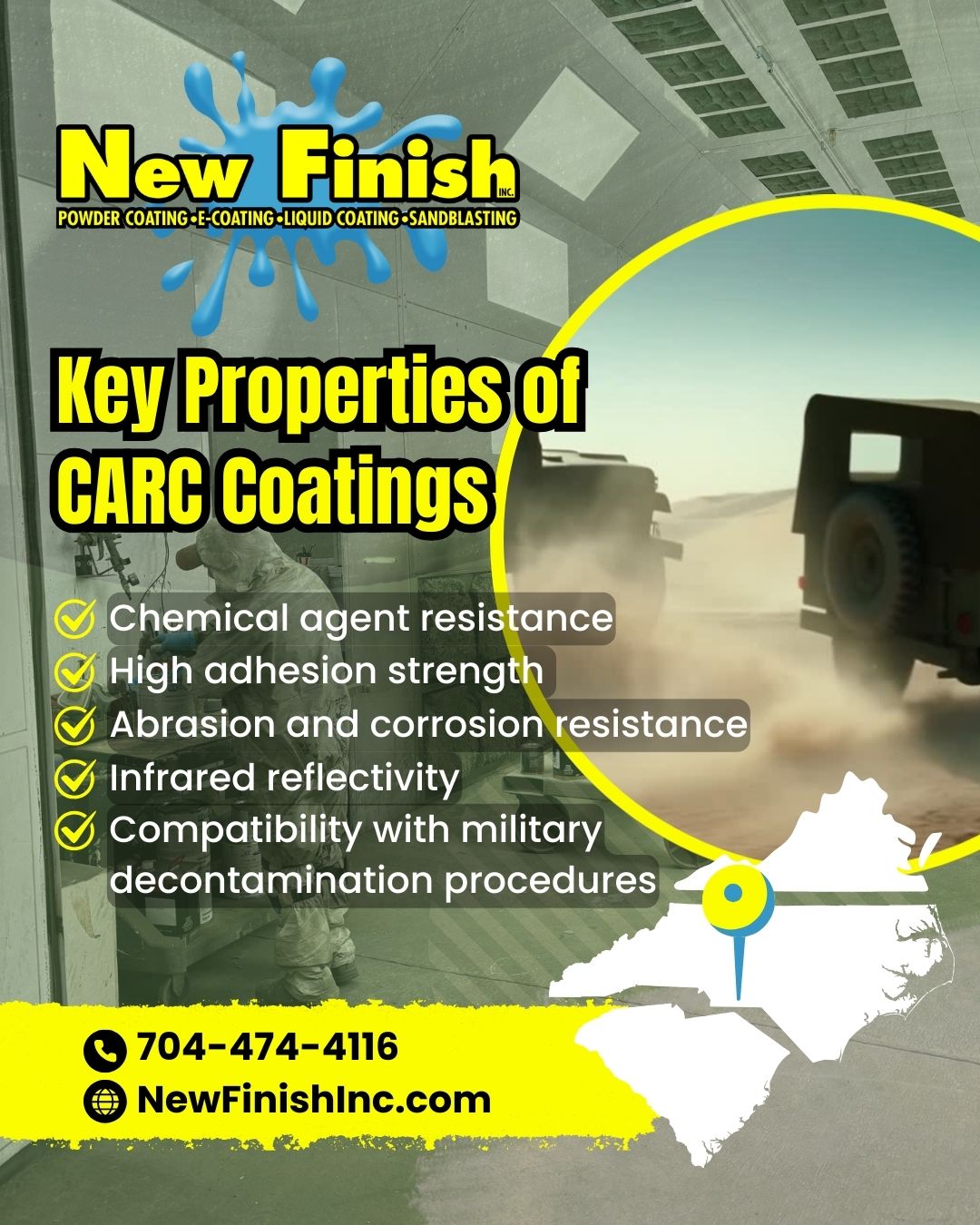
CARC paint systems are engineered for extreme durability and compliance. Key properties include:
-
Chemical agent resistance to prevent absorption and contamination
-
High adhesion strength on steel and other metal substrates
-
Abrasion and corrosion resistance in harsh environments
-
Infrared reflectivity to reduce detectability
-
Compatibility with military decontamination procedures
Because CARC coatings are highly specialized, proper application and curing processes are essential to achieving compliant performance.
Military and Industrial Applications of CARC Paint
CARC coatings are most widely used in defense and military applications, including:
-
Tactical and transport vehicles
-
Weapons platforms and armored equipment
-
Support machinery exposed to chemical risk
In addition to military use, CARC paint may be specified for industrial equipment supporting defense contractors, logistics operations, and specialized manufacturing environments where chemical resistance and durability are critical.
Why CARC Coating Application Requires Precision
Applying CARC paint is not the same as standard industrial or powder coating. The process requires:
-
Proper surface preparation, often including abrasive blasting
-
Controlled application environments
-
Strict adherence to mil-spec requirements
-
Trained technicians familiar with CARC systems
Failure to follow specification requirements can result in coating failure, non-compliance, or costly rework.
CARC Paint vs. Other Industrial Coatings
While CARC coatings fall under the broader category of industrial metal coatings, they serve a very specific purpose. Unlike conventional polyurethane or powder coatings, CARC paint is engineered to meet chemical resistance and military compliance standards, making it unsuitable for casual substitution.
Understanding when CARC is required — and when alternative coating systems are appropriate — helps manufacturers and defense partners select the right solution for performance and compliance.
CARC Coating Expertise You Can Trust
New Finish, Inc. provides specialized industrial and military-grade coating services, including CARC-compliant systems applied with precision and attention to specification requirements. From surface preparation through final application, every step is performed to meet demanding performance standards.
Learn more about our metal coating services and how we support military and industrial applications with compliant, high-performance coating solutions.
#CARCPaint #MilitaryGradeCoatings #IndustrialCoatings #MetalCoatings #HighPerformanceCoatings