When evaluating finishing systems, manufacturers often compare powder coating vs liquid coating from a performance standpoint.
However, in industrial manufacturing environments, the decision goes beyond durability alone.
Production flow, curing requirements, part geometry, and line efficiency all influence which coating process delivers the best results.
Understanding how each coating functions within the manufacturing process helps decision-makers select the right solution for their equipment, components, and production goals.
Powder Coating in the Manufacturing Process
Industrial powder coating is applied as a dry, electrostatically charged powder that adheres to grounded metal parts before being cured in an oven. From a manufacturing perspective, powder coating offers several operational advantages.
Because powder coating cures quickly once it reaches temperature, manufacturers benefit from:
-
Faster line speeds
-
Reduced handling between coats
-
Thicker, more uniform coverage in a single application
Powder coating is commonly integrated into production lines where parts can tolerate oven curing temperatures and consistent throughput is critical. This makes it ideal for manufacturers producing high volumes of metal components that require reliable, repeatable finishes.
Liquid Coating in Manufacturing Environments
Liquid coating systems apply wet paint using spray or flow methods and require drying or curing time between coats. While liquid coating may not match powder coating’s thickness or durability, it plays an important role in certain manufacturing applications.
Liquid coating is often selected when:
-
Parts are heat-sensitive and cannot be oven cured
-
Extremely thin film builds are required
-
Assemblies have complex geometries that limit powder access
In these cases, liquid coating provides flexibility within manufacturing environments where powder coating is not feasible.
Production Efficiency & Line Integration
From an efficiency standpoint, powder coating systems typically generate less waste and allow for material recovery, which can improve overall production efficiency. Overspray can often be reclaimed, reducing coating material loss and improving cost control.
Liquid coating processes may require additional ventilation, flash-off time, and rework considerations. These factors can slow production lines but are sometimes necessary depending on part requirements.
Manufacturers evaluating coating manufacturing processes must weigh these operational realities alongside finish performance.
The Role of Surface Preparation in Manufacturing
Regardless of coating type, proper surface preparation for coating is critical. Industrial sandblasting and cleaning processes remove contaminants and create the surface profile necessary for coatings to adhere correctly.
In manufacturing environments, inadequate surface preparation often leads to premature coating failure, rework, and production delays. Both powder coating and liquid coating rely on consistent surface prep to perform as intended.
Choosing the Right Coating Process for Manufacturing
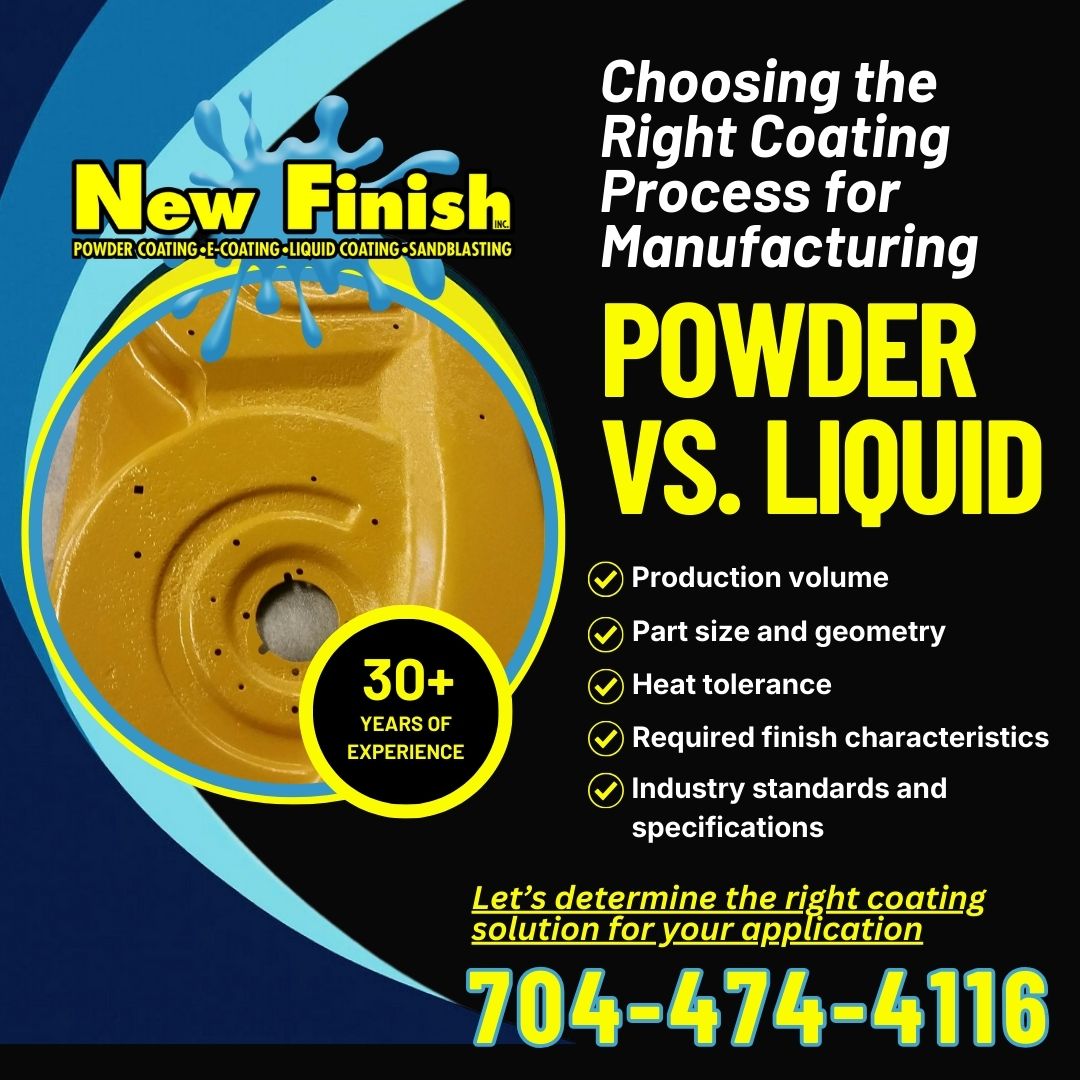
The decision between powder coating and liquid coating depends on:
-
Production volume
-
Part size and geometry
-
Heat tolerance
-
Required finish characteristics
-
Industry standards and specifications
Industries such as automotive manufacturing, large trucking, industrial equipment, recreational products, healthcare, and military applications often rely on powder coating for durability and efficiency, while liquid coatings support specialized manufacturing needs.
Working with an experienced metal coating specialist ensures the selected process aligns with both production demands and long-term performance requirements.
Manufacturing-Focused Coating Expertise at New Finish, Inc.
At New Finish, Inc. in Norwood, NC, we support manufacturers with industrial powder coating and liquid coating services designed to integrate seamlessly into production environments. Our coating processes are backed by thorough surface preparation and quality-driven procedures that help manufacturers achieve consistent results.
For manufacturers evaluating powder coating vs liquid coating in manufacturing, understanding how each process affects production efficiency and performance is key to making the right decision.
Choosing between powder coating and liquid coating impacts production efficiency, durability, and long-term performance. If you’re evaluating coating options for your manufacturing process, the team at New Finish, Inc. is ready to help.
Contact us today to discuss your project requirements and determine the right coating solution for your application.
#PowderCoating #IndustrialCoatings #NewFinishInc #AutomotiveCoatings #MilitaryGradeCoatings #AgriculturalEquipment #RecreationalVehicleCoatings #SustainableManufacturing #ManufacturingMagazine #TopCoatingProvider