Industrial coatings are designed to protect metal components from corrosion, abrasion, chemicals, and extreme environments.
Yet coating failures remain one of the most common — and expensive — issues manufacturers face.
Across automotive, military, trucking, healthcare equipment, and industrial manufacturing, premature coating failure leads to downtime, rework, warranty claims, and shortened equipment life. In most cases, failure isn’t caused by the coating itself, but by breakdowns in process, planning, or execution.
Understanding why coatings fail is the first step toward preventing it.
Common Causes of Industrial Coating Failure
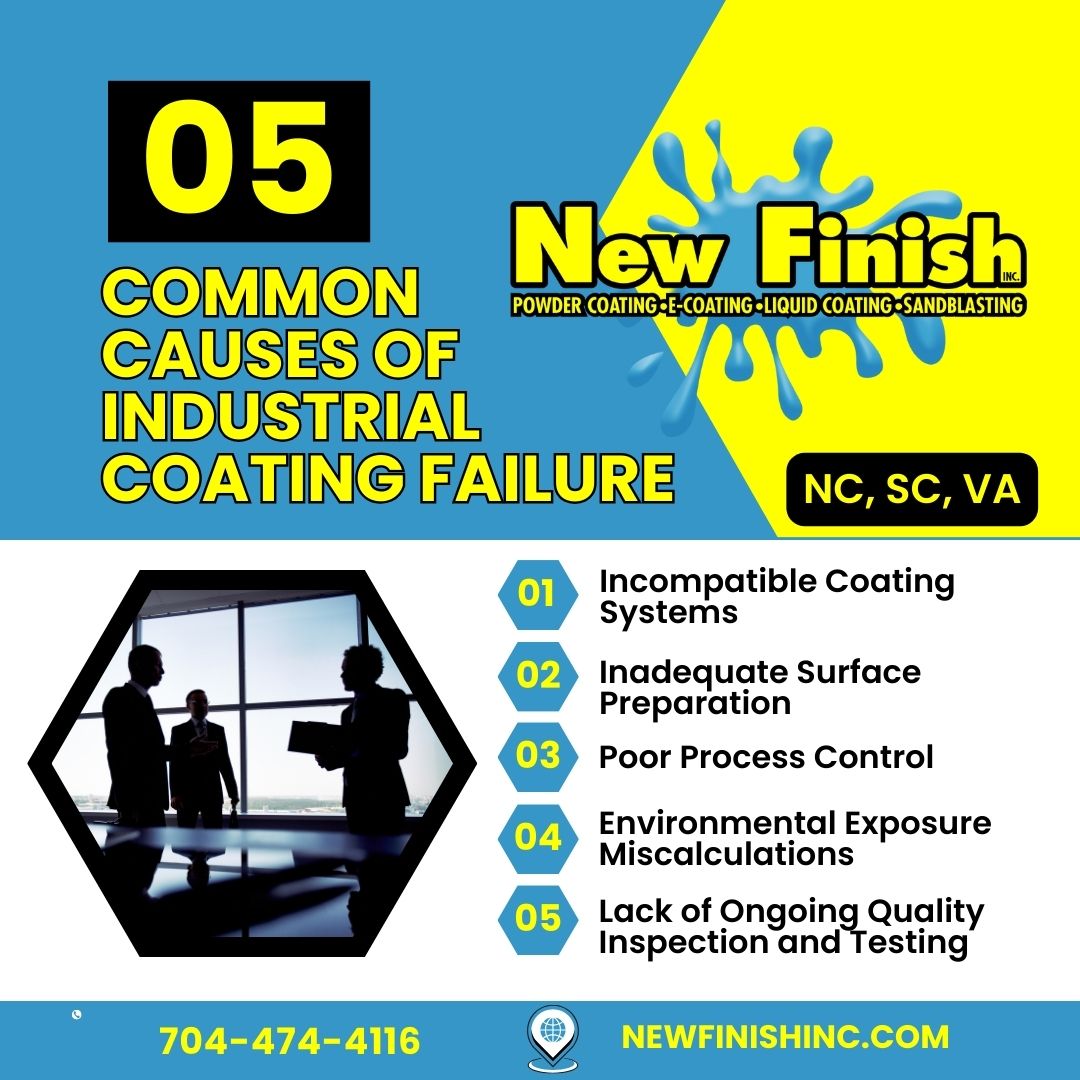
1. Incompatible Coating Systems
Not every coating works for every application. Choosing a system based solely on appearance or upfront cost often leads to early degradation.
For example:
-
Powder coating may not be ideal for deeply recessed or complex parts
-
Liquid coatings may lack the durability needed for high-abrasion environments
-
Military applications require CARC-compliant systems that meet strict specifications
Matching the coating system to the operating environment is critical.
2. Inadequate Surface Preparation
Issues include:
-
Incorrect surface profile
-
Residual oils or contaminants
-
Inconsistent blast patterns
These problems weaken adhesion and cause peeling, blistering, or corrosion creep — sometimes months after installation.
3. Poor Process Control
Coating performance depends on repeatable, controlled processes. Variations in temperature, cure time, coating thickness, or application method can significantly reduce durability.
ISO-certified facilities use documented procedures and quality checks to ensure consistent results across production runs.
4. Environmental Exposure Miscalculations
Many failures occur because real-world exposure is underestimated. Equipment may face:
-
Constant moisture or salt exposure
-
Chemical contact
-
Extreme heat or cold
-
UV degradation
If the coating system isn’t designed for those conditions, failure is inevitable.
5. Lack of Ongoing Quality Inspection and Testing
Even when the correct coating system is selected and applied, failures can occur if inspection and testing are inconsistent or skipped altogether.
Coating thickness verification, adhesion testing, and visual inspection help catch issues before parts leave the facility. Without these safeguards, small defects can turn into large-scale failures once equipment enters service.
Manufacturers that prioritize documented inspection protocols reduce warranty claims, improve repeatability, and gain confidence that coated components will perform as intended in the field.
How Advanced Coating Processes Prevent Failure
High-performance coating providers don’t treat coating as a single step — they design end-to-end systems that reduce risk and improve longevity.
Powder Coating for High-Wear Applications
Powder coating offers excellent impact resistance and durability when applied correctly, making it ideal for heavy equipment, industrial components, and automotive parts.
E-Coating for Corrosion Protection
Electrophoretic coating delivers uniform coverage — even inside complex geometries — significantly reducing corrosion risk for manufacturers that require consistent protection.
CARC Coatings for Military Compliance
CARC coatings are engineered to meet military specifications and must be applied under tightly controlled conditions to ensure safety, performance, and compliance.
Why Manufacturers Across NC, SC & VA Focus on Process — Not Just Paint
The right partner:
-
Evaluates part geometry and usage conditions
-
Selects coatings based on performance, not trends
-
Uses controlled, documented processes
-
Scales reliably for production demands
This approach reduces rework, extends service life, and lowers total cost of ownership.
Protecting Performance Starts with the Right Partner
Industrial coatings aren’t cosmetic — they’re a critical performance system. When coatings fail, the cost is measured in downtime, lost productivity, and replacement expenses.
By working with a coating partner that understands failure points and designs solutions to prevent them, manufacturers gain reliability they can count on.
For organizations seeking industrial coating services in NC, SC, or VA, New Finish, Inc. delivers coating systems engineered to perform long after application. Contact New Finish, Inc., today and discuss your industrial coating needs.
#IndustrialCoatings #PowderCoating #ECoating #Manufacturing #NCManufacturing #SCManufacturing #VAManufacturing